SARS Excise Audit Checklist: What Alcohol Producers Should Have Ready
An excise audit is not a question of if but when: licensed customs and excise warehouses are audited as a matter of routine, and the experience is entirely determined by the state of your records on the day. Producers with systematic records host a short visit; producers with shoeboxes host an assessment. Here is what SARS typically asks for, and how to have it ready permanently rather than heroically.
The Core Checklist
- Excise account and returns: your submitted DA260-family returns for the audit period, with the working papers behind each figure. Every declared number should be traceable to transactions, not to memory.
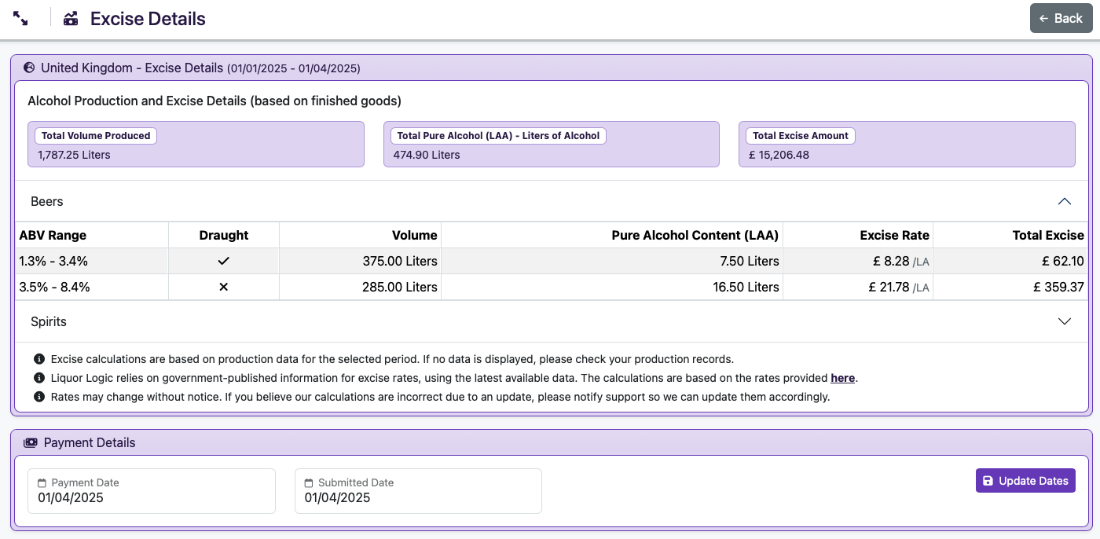
- Production records per batch: volumes, strengths, and dates for every batch — mash to spirit, brew to packaging — with litres of absolute alcohol calculated consistently. Our excise reporting guide covers the LAA arithmetic auditors re-check first.
- Warehouse movement records: receipts into bond, transfers between bonded warehouses (with the corresponding documents), duty-paid removals, and exports with proof of export. The closing balance must reconcile to physical stock.
- Loss records: maturation losses, processing losses, breakages, and samples — recorded when they happened, quantified, and within reasonable norms. Undocumented shortfalls are treated as unaccounted removals and assessed for duty. Our alcohol technology blog covers the wider toolset that keeps this from happening.
- Stock take evidence: dated physical counts with variances investigated and explained, not quietly adjusted.
- Licence and registration documents: the warehouse licence, any amendments, and the premises plan matching how you actually operate.
The Five Findings That Cost Producers Money
- Physical stock does not match the excise account. The classic finding, and almost always a process problem: consumption, samples, and losses recorded late or never.
- LAA arithmetic errors. Spreadsheet formulas that drifted, strengths measured once and assumed forever.
- Bonded and duty-paid stock mixed. One storeroom, no systematic separation — the audit equivalent of an open goal.
- Missing movement documents. Transfers between warehouses without the paperwork on both ends.
- Records that cannot be attributed. Numbers changed with no record of who, when, or why. Attributable records are credible records.
Being Audit-Ready by Default
The producers who pass audits comfortably all do the same thing: they stopped treating excise records as a monthly compilation task and made them a by-product of daily operations. When batches, transfers, losses, and removals are captured in a system at the moment they happen, the audit file is simply a set of reports. That is the design principle behind Liquor Logic's production and compliance tracking — and the wider record-keeping picture is covered in our South African alcohol compliance guide.
If you are earlier in the journey, start with what excise duty is and how manufacturer registration works — the audit obligations flow directly from the licence. For the wider picture of how excise duty works and what software needs to handle, see our excise duty software guide.
Frequently Asked Questions
How far back can a SARS excise audit go?
Records must generally be retained for five years, and audits can examine the full retention period. If your system changed in that window, keep the old records accessible.
What happens if the auditor finds a shortfall?
Unexplained shortfalls are assessed as duty-payable removals, typically with penalties and interest. Documented, reasonable losses recorded at the time they occurred are the difference between a note and an assessment.
Can software really prevent audit findings?
It prevents the record-keeping findings, which are most of them. It cannot fix a genuinely missing bottle — but it will tell you about it months before the auditor does.
Conclusion
Audit readiness is a habit, not a project. Capture production, movements, and losses as they happen, reconcile stock on a cycle, and the checklist above stays permanently green. Book a demo to see how Liquor Logic keeps the audit file writing itself.