Emerging Trends in Craft Alcohol Production: How Producers Stay Ahead
A forward-looking analysis of trends in craft alcohol production, including technology, sustainability, small-batch innovation, and integrated software solutions.
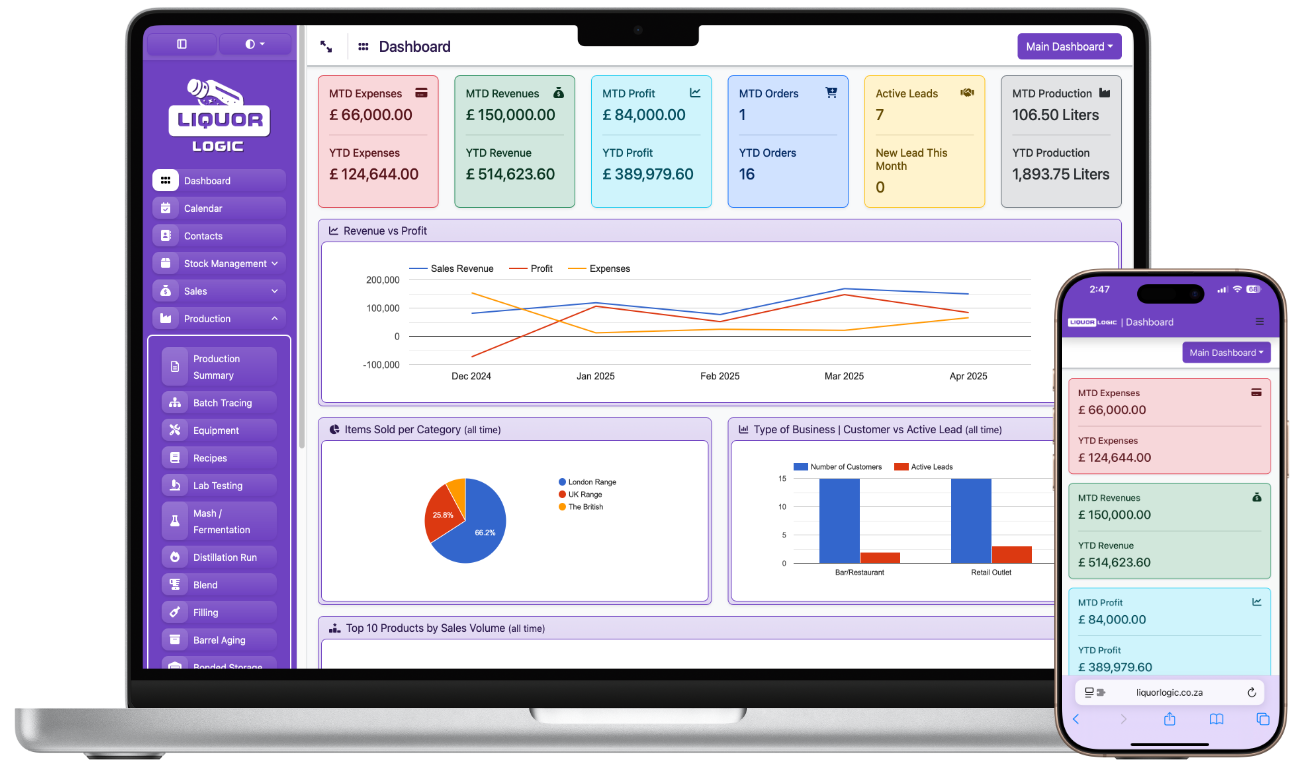
Craft alcohol production is changing faster than at any point in the past decade. Consumer tastes are fragmenting, input costs keep climbing, and the producers pulling ahead are the ones treating operations as seriously as flavour. Here are the trends we see shaping distilleries, breweries, wineries, and cideries right now, with a South African lens where it matters.
1. Sustainability Moves From Marketing to Operations
Water stewardship, lightweight glass, spent-grain partnerships with farmers, and energy planning have become procurement and cost questions rather than label copy. South African producers add a local twist: solar and battery investment driven as much by load-shedding resilience as by emissions. The producers doing this credibly measure it, batch by batch; we cover the pressures in detail in our piece on sustainability in craft alcohol.
2. Small Batch and Experimental Production
Limited releases, barrel experiments, indigenous botanicals, and collaboration brews drive margin and press attention. South Africa's wave of fynbos gins, marula liqueurs, and botanical ciders shows the upside, but experimentation multiplies recipes, ingredients, and packaging variants, which is precisely what breaks spreadsheet-based stock and costing. Producers who scale experimentation successfully run it on systems with proper recipe and formulation tracking, so every trial batch has a cost and a repeatable spec.
3. Data-Driven Production and Analytics
Yield per batch, loss per stage, cost per bottle, sales velocity per SKU: producers now expect to see these numbers weekly, not at year-end. The competitive gap is widening between businesses that decide from data and those that decide from feel. The prerequisite is unglamorous: capture production and sales events in one system as they happen, and the analytics come almost free.
4. Deeper Integration of Digital Tools
The pattern of one platform connecting production, inventory, compliance, and sales is replacing the old stack of disconnected apps and spreadsheets. The integration payoff is compounding: a recipe drives stock consumption, which drives purchasing, which drives costing, which feeds pricing. Our guide to digital transformation for producers lays out a practical adoption path.
5. Direct-to-Consumer Everything
Tasting rooms, cellar-door sales, clubs, and online ordering give producers margin and, more importantly, first-party customer data. The operational bar is higher than wholesale: real-time stock, per-customer history, and a point of sale that shares inventory with production. B2B is following the same curve, with trade customers expecting to order through a portal like an order hub rather than by phoning a rep.
6. The Rise of Low- and No-Alcohol Options
Low- and no-alcohol lines are now a genuine volume category rather than a novelty, and they bring production wrinkles: separate recipes and processes, different excise treatment, and parallel SKUs that double packaging complexity. Producers adding a zero line should plan the inventory and compliance implications up front, not after the first confused stocktake.
7. Compliance as a Competitive Advantage
As authorities digitise, producers with clean, systematised records move faster: export certificates, excise audits, and new-market listings all clear quicker when the paperwork is a report rather than a project. In South Africa that means SARS excise discipline; our compliance guide covers the full picture. Resilience planning belongs here too; see our analysis of load-shedding's impact on distilleries.
Questions Craft Producers Are Asking
Which trend should a small producer invest in first?
Data foundations. Sustainability, DTC, and experimentation all depend on knowing your real costs, yields, and sales velocity, so putting production and sales into one system is the enabling move for everything else.
How are craft distilleries using analytics day to day?
Weekly reviews of batch yield and loss, live margin per SKU and channel, and demand forecasts driving purchase orders. None of it requires a data scientist; it requires capturing operations in software rather than on paper.
Can a small craft producer compete with large producers on efficiency?
Yes, because agility is the small producer's structural advantage. A five-person distillery with integrated systems can change a recipe, reprice a SKU, or launch a release in days. The trap is wasting that agility on administrative overhead that software should be doing.
Conclusion
Every trend on this list rewards the same underlying capability: an operation that knows its numbers and can act on them quickly. Liquor Logic exists to give craft producers that foundation, from production and inventory through compliance, POS, and B2B ordering, in one platform. Book a demo to see where it fits your roadmap.
More Articles..
Alcohol Testing Requirements in South Africa: What Producers Must Test and Record
ABV on the label, composition standards under the Liquor Products Act, excise strength declarations ...
Water, Wood, and Waste: Sustainability Pressures on Craft Producers in 2026
Consumers want transparency. Regulators want lower impact. And producers are being forced to do more...
The Cider Comeback: Global Trends Reshaping Craft Cider in 2026
Cider isn’t just a sideline anymore — it’s becoming one of the most dynamic and fast-evolving catego...