Botanical cider and the new wave of alcohol cider in South Africa
From fynbos-infused ferments to herb-forward fruit ciders, botanical cider is reshaping what South African consumers expect from the cider category. New alcohol cider styles are arriving fast — and the producers who move quickly and manage their operations efficiently are the ones winning shelf space and tap handles. This article explores what's driving the botanical cider trend, what makes these products distinctive, and how craft producers can scale without losing control.
What is botanical cider?
Botanical cider is a style of cider — typically fermented from apple or pear juice — that is infused or co-fermented with herbs, flowers, roots, spices, or other plant-based ingredients. The "botanical" element can be added at various stages of production, including during fermentation, post-fermentation, or at packaging, each giving a different flavour profile and intensity.
Common botanicals used in South African craft ciders include:
- Fynbos botanicals — rooibos, buchu, honeybush, and Cape chamomile
- Culinary herbs — rosemary, thyme, lavender, and lemon verbena
- Citrus elements — dried orange peel, lemon zest, and yuzu
- Spices — cardamom, ginger, cinnamon, and pink peppercorn
- Flowers — elderflower, hibiscus, and rose
The result is a cider that sits at an exciting intersection between traditional fruit fermentation and the kind of flavour complexity more commonly associated with craft gin or botanical spirits.
Why is new alcohol cider growing so fast in South Africa?
Several converging trends are driving the growth of new and botanical alcohol cider styles in the South African market:
Health-conscious consumers seeking lower-alcohol options
Many ciders — especially in the botanical and fruit-forward category — sit at a lower ABV than wine or spirits. For consumers who want to drink socially but mindfully, cider offers an attractive middle ground. Botanical flavours add complexity that makes the lower alcohol feel intentional rather than like a compromise.
The craft movement reaching the cider category
South African consumers have embraced craft beer enthusiastically over the past decade. That same appetite for provenance, creativity, and local ingredients is now flowing into cider. Botanical ciders, with their connection to local flora and artisanal production, fit squarely into this narrative.
Demand for uniquely South African products
South Africa has extraordinary natural botanical diversity — particularly the Cape Floral Region, which is one of the world's six floral kingdoms. Producers who tap into indigenous botanicals like buchu, rooibos, and fynbos are creating products that genuinely cannot be replicated anywhere else in the world. This is a powerful commercial differentiator, both domestically and for export markets.
Growing female and millennial consumer base
Market research across Southern Africa consistently shows strong cider category growth among younger consumers and women who find craft cider — particularly in lighter, more aromatic styles — more appealing than beer. Botanical ciders, with their visual appeal and flavour sophistication, are particularly well-positioned to capture this demographic.
The production challenges of botanical cider
Botanical cider is exciting to make, but it introduces production complexity that traditional cider doesn't have. Producers scaling up botanical cider need to manage:
- Botanical sourcing and consistency — wild-harvested or small-batch botanical ingredients vary in intensity between batches, which affects flavour consistency and requires careful recipe adjustment
- Ingredient traceability — knowing exactly which botanical lot went into which production batch is essential for quality control and recall management
- Infusion timing and method — different botanicals behave differently depending on when and how they're introduced, requiring precise process control
- ABV management — botanical additions can affect fermentation and final alcohol content, which has direct implications for excise duty calculations
- Shelf life and stability — botanical-infused ciders can be more sensitive to oxidation and microbial instability, making accurate stock rotation critical
What South African botanical cider producers need in their operations
To produce botanical cider at scale — and to do it consistently — producers need systems that go beyond a basic brewing setup. Specifically:
Recipe management with multi-stage ingredient tracking
Your production software needs to handle recipes that include both primary fermentation ingredients and secondary botanical additions at different stages. Each ingredient needs to be tracked to the batch level so that if a quality issue arises, you can trace it back to its source immediately.
Batch costing that captures botanical ingredient costs
Botanical ingredients — especially locally foraged or specialty-sourced botanicals — can be a significant cost driver. Accurate batch costing must include these inputs, updated in real time as production progresses, so you always know your true cost of goods and can price profitably.
Excise compliance for cider and AFBs
In South Africa, cider is classified as an alcoholic fruit beverage (AFB) for excise purposes. Excise duty applies based on production volume and alcohol content. Botanical additions that affect the final ABV need to be accurately measured and recorded, as this directly affects your duty liability.
Inventory management across complex ingredient lists
Botanical cider producers often work with a much longer ingredient list than traditional cider makers. Managing stock levels, reorder points, and expiry dates across dozens of botanical SKUs requires a dedicated inventory system — not a spreadsheet.
How Liquor Logic supports botanical cider producers
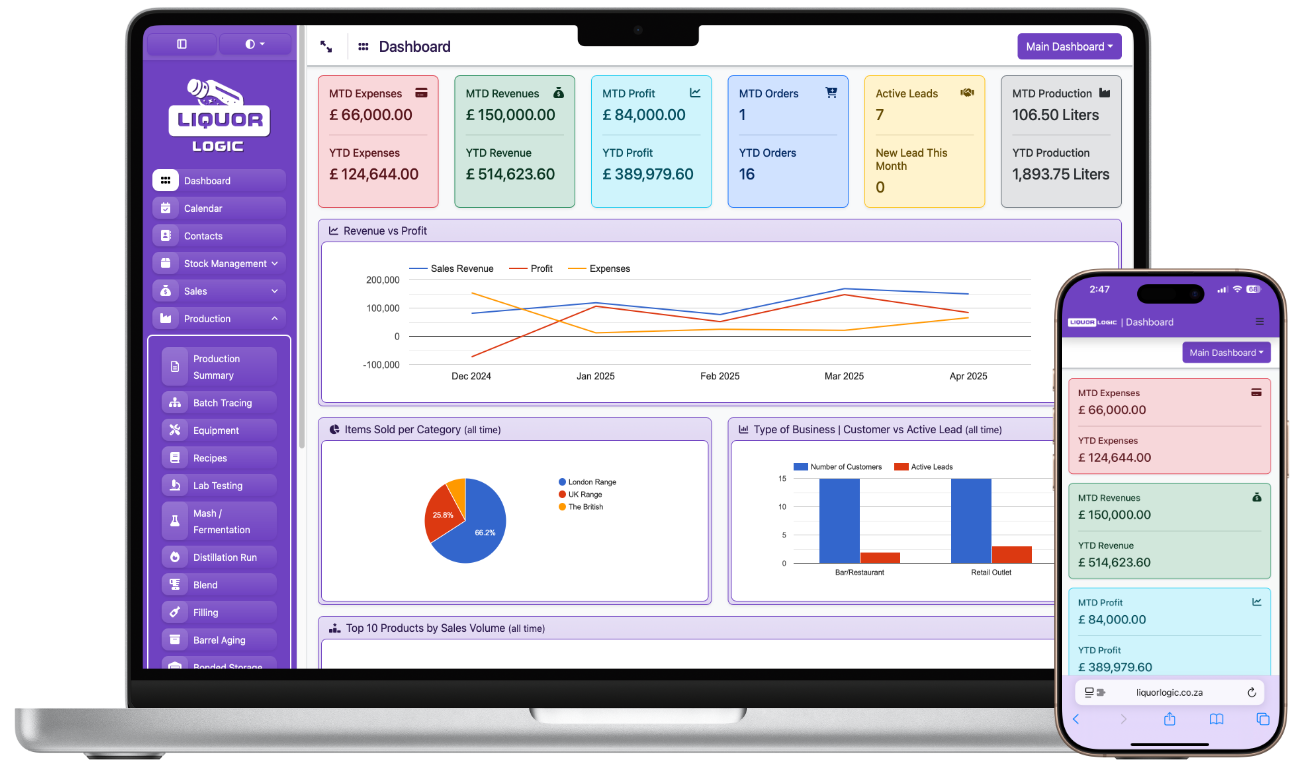
Liquor Logic is purpose-built for South African craft beverage producers, including those working with complex, multi-ingredient products like botanical cider. The platform gives you:
- Multi-stage recipe management — define primary and secondary ingredient additions at different production stages, all linked to your batch records
- Real-time batch costing — every ingredient, including botanical additions, is costed automatically as it's used
- Full ingredient traceability — trace any input from supplier delivery through to finished product, batch by batch
- Automated excise compliance — production volumes and ABV data feed directly into your excise reporting, keeping you compliant with SARS without manual reconciliation
- Inventory alerts — get notified when botanical stock levels drop below your defined thresholds so you're never caught short mid-production
The opportunity is real — if you have the systems to support it
Botanical cider and the broader new alcohol cider category represent one of the most exciting growth opportunities in the South African craft beverage market right now. The producers who will win long-term are those who combine genuine flavour innovation with the operational discipline to deliver consistency, stay compliant, and scale efficiently.
If you're producing botanical cider — or planning to — Liquor Logic gives you the production, inventory, and compliance infrastructure to do it properly from day one.