Kegshoe Alternatives: Keg Tracking as Part of the Whole Picture (2026)
Kegshoe does one job — tracking kegs through fills, deliveries, customers, and returns — and does it competently. Kegs are worth real money, they vanish at a notorious rate, and a specialist tracker beats a whiteboard by miles. The alternatives question is architectural: should keg tracking be a separate subscription that knows nothing about your beer, your customers, or your invoices — or a feature of the platform that already runs them?
The Case Against a Standalone Tracker
- Disconnected data: the tracker knows a keg went to a customer; your invoicing system knows what was billed; your inventory knows what was brewed. Reconciling three systems is how kegs *and* litres go missing between them.
- Double capture: every fill and delivery gets recorded twice — once for the tracker, once for the business — and double capture is where staff quietly stop doing one of them.
- Another bill, another login: specialist tools accumulate; each is small, together they are a stack.
The Alternatives, Honestly
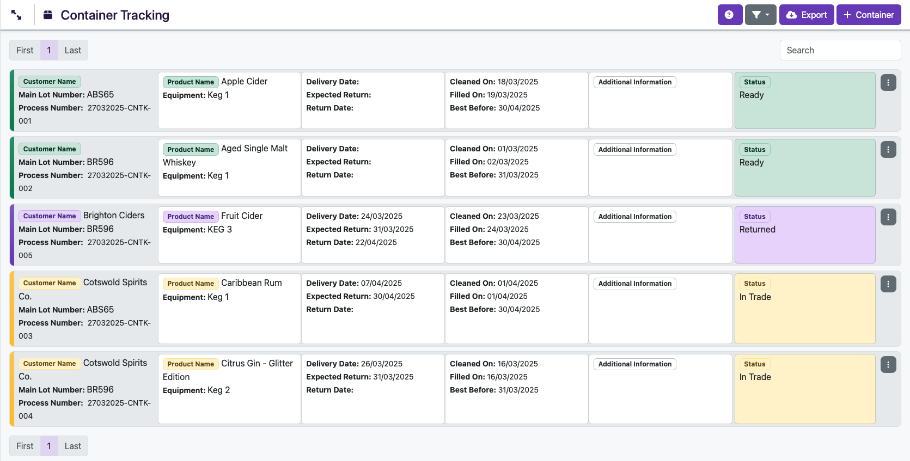
Liquor Logic — keg and container tracking built into the production platform: fills come from batches, deliveries attach to customers and invoices, returns update availability, and empties-outstanding is a report beside your stock and sales. One capture, one system, from R549/month including taproom POS and B2B ordering. Trade-off: Kegshoe's single-purpose focus means some tracker-specific niceties (its own driver app ecosystem) that a platform matches functionally rather than identically. Line-by-line: Liquor Logic vs Kegshoe.
Kegstar / rental models — sidestep ownership entirely by renting kegs per fill; sensible for some volumes, and the tracking becomes the rental company's problem at a per-keg price.
Staying with Kegshoe — a brewery happy with its production stack that only lacks keg visibility can bolt Kegshoe on and be well served. The calculation changes the day you are also reconciling it against everything else.
Frequently Asked Questions
How many kegs do breweries actually lose?
Industry estimates commonly run at several percent of the fleet per year — at thousands of rand per keg, a mid-size fleet quietly loses a bottling line's worth of capital over a few years. Tracking pays for itself; the question is only where it lives.
Does Liquor Logic track kegs by individual serial?
Yes — individual containers with status, location, customer, and history, tied to the batch that filled them (which also completes the traceability chain our inventory guide describes).
What about non-keg containers?
The same container tracking covers IBCs, barrels, and returnable crates — anything with a serial number and a habit of wandering.
Conclusion
Track your kegs — that part is not optional. Whether you need a separate product to do it depends on how much reconciliation you enjoy. The comparison shows keg tracking as a feature rather than a subscription.