Beer30 Alternatives: Brewery Data Without the US-Only Limits (2026)
Beer30, from 5th Ingredient, has a clear identity: it is the analytics-first brewery platform, tracking process data from grain to glass with a granularity that data-driven brewers love. If your ambition is squeezing every point of yield out of your brewhouse and you operate in the US, it earns its shortlist place. The alternatives conversation starts where its focus ends.
Why Breweries Look Beyond Beer30
- US centre of gravity: market focus, support, and compliance orientation are American; a South African brewery's excise and audit reality (see our SARS audit checklist) is out of scope.
- Brewery-only: spirits, wine, and commercial cider need different workflows — and increasingly, SA craft producers make more than one.
- Analytics is not operations: deep process data is valuable, but venues also need the boring machinery — POS for the taproom, B2B ordering, accounting sync — which means more systems around Beer30.
- USD billing — the recurring theme for all imported software.
The Alternatives, Honestly
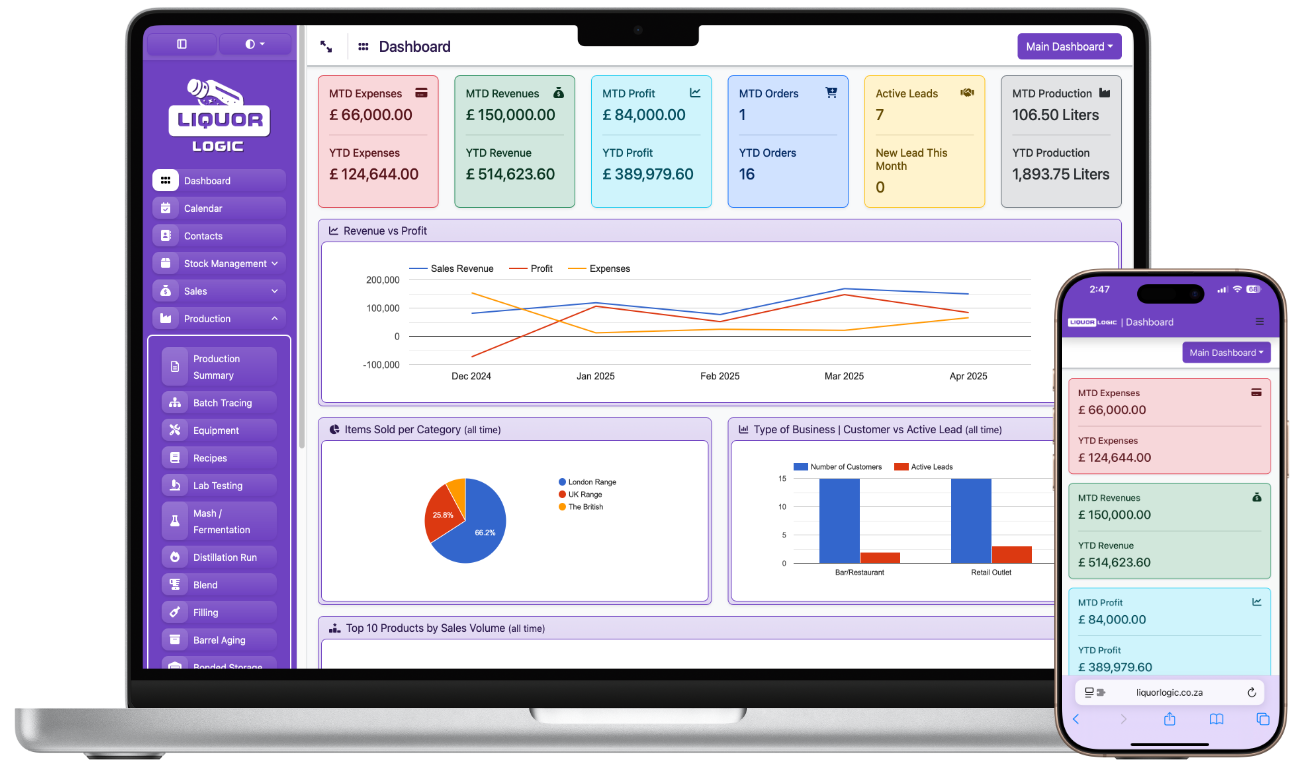
Liquor Logic — production tracking with batch-level yields and losses, plus everything around it: live inventory, SARS excise, taproom POS, CRM, B2B ordering, and accounting sync, rand-priced from R549/month. Trade-off: if pure process-data granularity is your single criterion, Beer30's analytics depth is its genuine specialty. Line-by-line: Liquor Logic vs Beer30.
Ekos / Breww / Ollie — the broader brewery-platform field, each covered honestly in its own guide: Ekos, Breww, Ollie.
Staying with Beer30 — a US brewery whose bottleneck is process optimisation, with POS and compliance already solved elsewhere, is Beer30's ideal customer and should probably stay.
Frequently Asked Questions
Do I lose data-driven brewing by choosing a broader platform?
You lose some instrumentation granularity and gain operational data Beer30 never sees: sales velocity per SKU and channel, taproom margins, stock variance. Most breweries' biggest losses hide in operations, not in the mash tun.
What does Liquor Logic track per batch?
Recipes and scaling, stage-by-stage volumes and losses, yields, costs from actual inputs, lab results, and full ingredient-lot traceability — the working core described in our brewery inventory guide.
How do I compare them properly?
List your five most expensive information gaps and score both systems against them — the method from our software evaluation guide. Analytics you will not act on should score zero.
Conclusion
Beer30 answers "how efficient is my brewhouse?" brilliantly. If your harder questions are "where is my stock, what does SARS need, and why does the taproom till not match the cellar?", you need an operations platform first. The comparison lays it out side by side.