Bar POS Features That Actually Matter: Tabs, Split Bills and Stock Control
A bar is not a restaurant with fewer plates. Service is faster, transactions are smaller and more frequent, stock is poured rather than plated, and most of the margin leaks are invisible until stocktake. Choosing a bar POS means optimising for a different set of features than a restaurant system — here are the ones that actually protect your margin.
1. Open Tabs That Cannot Walk Away
Paper tabs and memory do not survive a busy Saturday. A proper tab system gives every tab a name, an optional credit limit, and a running total visible to any staff member. Partial payments matter more than people expect: when three of a group of six leave early, the POS must split their share off cleanly without closing the tab. At close, unsettled tabs should be a report, not a surprise.
2. Split Billing With Mixed Payments
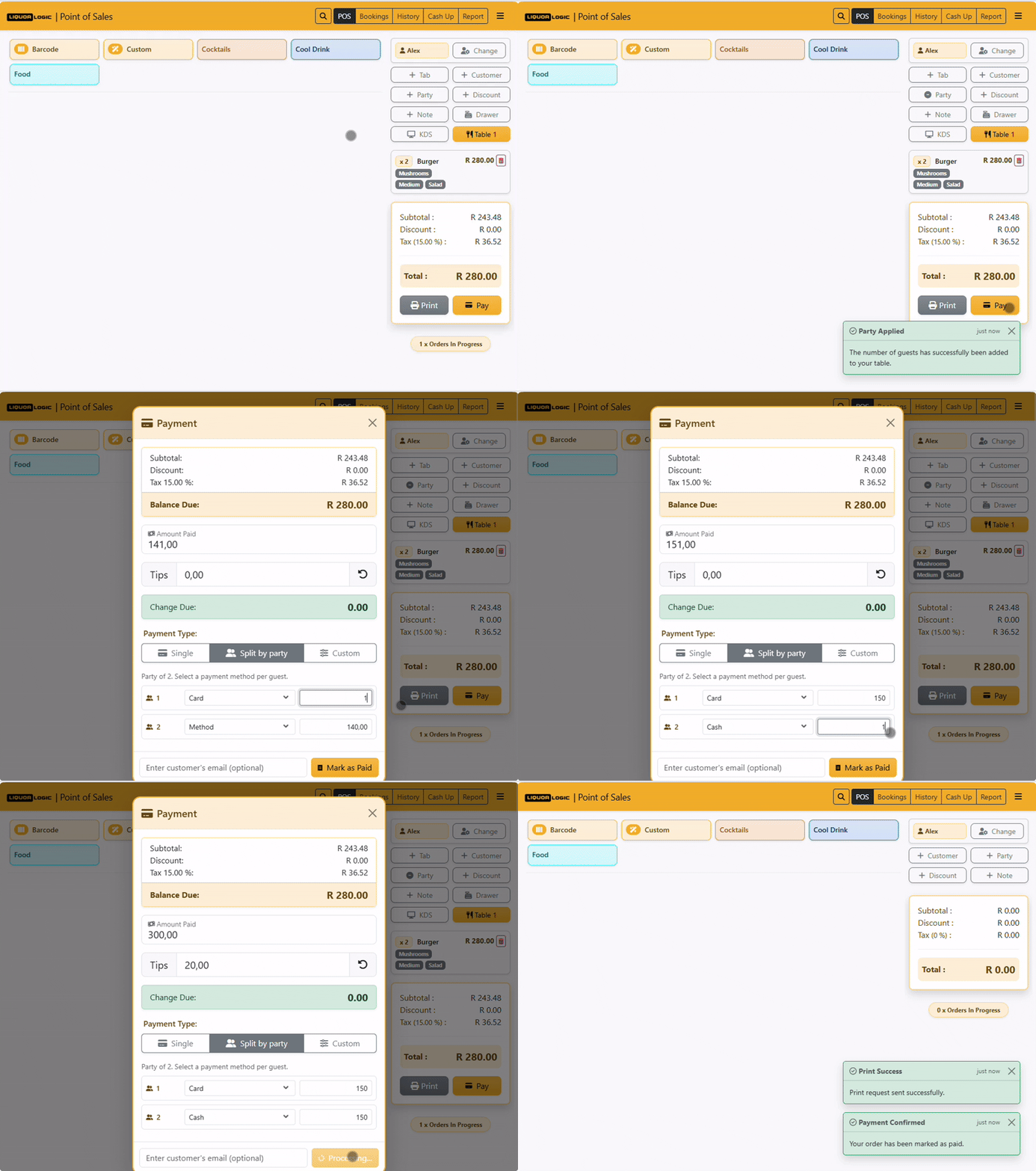
Groups pay in fragments: some cash, some card, someone's Zapper. The POS needs to split a bill equally or by custom amounts and accept different payment methods against the same bill without gymnastics. Every extra step at settlement time is queue time — and queue time at last rounds is lost revenue.
3. Per-Pour Stock Control
This is the feature that separates bar-grade systems from retail tills. Selling a double brandy should deduct 50 ml from a specific bottle in stock; selling a cocktail should deduct each ingredient. Once that link exists, the classic bar leaks become visible: expected bottle count versus actual exposes over-pouring, unrecorded free rounds, and shrinkage. Bars that switch on per-pour tracking usually find several percentage points of gross profit they did not know they were losing. The same engine powers full inventory management behind the bar — reorder alerts included.
4. Speed: Layouts, Speed Keys, and Staff Switching
Ring-up speed is a revenue feature. Look for one-tap speed keys for top sellers, drink-oriented category layouts, and instant staff switching by PIN or fingerprint so one terminal serves several barmen without shared logins. Shared logins are how accountability dies; per-user actions are how voids, discounts, and reprints stay honest.
5. Cash-Up With Variance
The nightly cash-up should produce expected versus actual per payment type and per staff member, automatically. When the drawer is short, you want to know by how much, on whose shift, against which sales — the same night. Systems without variance reporting turn every shortfall into an unwinnable argument.
6. Promotions Without Leakage
Happy hour, two-for-one, quantity deals: promotions run at the till by barman arithmetic leak money in both directions. Automated combo and time-based pricing applies the deal exactly, every time, and reports what each promotion actually cost and sold.
What You Can Skip
Bar-only venues rarely need reservations or a kitchen display — though if you serve food, the same Liquor Logic plan includes the full restaurant toolkit at no extra cost. Be more sceptical of paid add-ons dressed as essentials: loyalty modules priced separately, "premium" reporting tiers, and per-terminal fees are pricing strategies, not features. Our POS cost guide covers the pricing traps in detail.
Frequently Asked Questions
What is the difference between a bar POS and a restaurant POS?
Emphasis. A bar POS optimises for transaction speed, tabs, and per-pour stock control; a restaurant POS adds floor plans, kitchen routing, and reservations. On Liquor Logic both run on the same platform and plan — you enable what your venue needs.
How do bars stop staff giving away free drinks?
Attributability: every pour rung under a named login, per-pour stock deduction, and expected-vs-actual bottle counts. Free rounds do not stop entirely — but unrecorded ones stop being invisible.
Can one system run the bar and a bottle store side of the business?
Yes. Barcode-driven retail and poured service can share one stock ledger — see the dedicated liquor store POS page for the retail side.
Conclusion
Judge a bar POS on five things: tabs, splits, per-pour stock, speed, and cash-up variance. Everything else is decoration. Liquor Logic ships all five in one R349/month plan — start a free 30-day trial and run it alongside your current till for a week.